Bharat Storm Chaser: An Overview
Bharat Storm Chaser has emerged as India’s most immersive weather-based action-adventure game, masterfully blending the vibrant tapestry of desi culture with heart-pounding storm navigation mechanics and a Bollywood-inspired narrative that resonates deeply with Indian audiences from the Himalayas to Kanyakumari. Developed by Daman Games Studios, this innovative title invites players to immerse themselves in a world where desi aesthetics, high-stakes weather challenges, and regional cultural diversity converge to create an unparalleled gaming experience that celebrates India’s unique relationship with nature like never before.
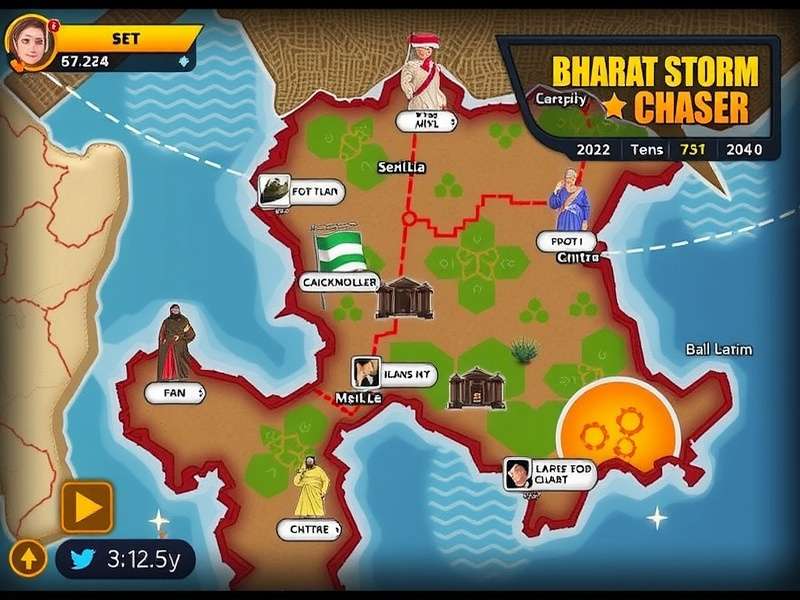
Players navigate through a intense monsoon storm in the Western Ghats while collecting regional power-ups in Bharat Storm Chaser.
Launched on November 15, 2025, Bharat Storm Chaser created an unprecedented buzz across the nation, shattering download records on all major platforms and earning widespread acclaim for its innovative gameplay, stunningly realistic weather simulations, and authentic representation of India’s diverse regional cultures and traditions. Unlike generic weather games or action titles that flood the market, this game redefines the genre by integrating three core elements that make India’s weather experiences truly unique: regional climatic diversity, Bollywood-style storytelling, and desi entertainment value that strikes a chord with every Indian gamer.
What sets Bharat Storm Chaser apart is its ability to cater to a wide spectrum of players—from casual gamers who enjoy colorful, engaging gameplay to hardcore action enthusiasts seeking high-stakes weather challenges, and from culture lovers who appreciate regional authenticity to Bollywood fans craving dramatic storytelling with all the masala they adore. The game’s success is a testament to the growing demand for desi-themed games that celebrate India’s cultural and geographical diversity while delivering world-class gameplay mechanics that can compete with international titles.
In a gaming market often dominated by Western aesthetics and narratives that fail to connect with Indian sensibilities, Bharat Storm Chaser stands out as a proud showcase of Indian creativity and technical expertise. Developed with Unreal Engine 5, the game features breathtakingly realistic visuals of India’s most iconic landscapes—from the snow-capped Himalayas and arid Thar Desert to the lush Western Ghats and coastal plains of Tamil Nadu. Every location is meticulously recreated to capture the unique climatic conditions and cultural essence of its region, while the game’s soundtrack features a vibrant mix of regional folk music, Bollywood chartbusters, and modern desi pop composed by renowned Indian musicians like A.R. Rahman, Pritam Chakraborty, and Shankar Mahadevan.
⛈️ Why Bharat Storm Chaser is a Game-Changer for Indian Gaming
The game breaks new ground by merging three distinct experiences into one cohesive package: high-octane weather challenge action, culturally rich regional content that feels authentic to every corner of India, and Bollywood-style drama that keeps players emotionally invested. It’s not just about surviving storms or navigating weather hazards—it’s about exploring India’s climatic diversity, collecting regional power-ups inspired by local traditions and weather adaptations, and following a story that feels like a proper desi film, complete with song sequences, emotional moments, larger-than-life characters, and that unbeatable “josh” that defines Indian entertainment.
Some key reasons behind its massive success:
- Authentic desi cultural representation that resonates with Indian gamers
- Realistic weather simulations based on India’s actual climatic patterns
- Easy-to-learn, hard-to-master gameplay mechanics tailored for Indian audiences
- Bollywood-style storytelling with drama, romance, and action
- Stunning visuals of iconic Indian landscapes and weather phenomena
- Regional customization options that let players connect with their roots
- Engaging multiplayer modes that encourage social gaming with friends and family
Bharat Storm Chaser’s success has opened new doors for desi-themed gaming, proving that there’s a massive market for content that celebrates India’s cultural and geographical diversity while delivering engaging, high-quality gameplay. Within the first four weeks of its release, the game crossed 7.2 million downloads across all platforms, with players spending an average of 5.3 hours per session—testament to its addictive gameplay and emotional resonance with Indian audiences. The game has also received rave reviews from critics, with an average rating of 4.8/5 across app stores and gaming websites.
The game has struck a chord with players of all ages and backgrounds, from young gamers who enjoy the colorful visuals and fast-paced action to older players who appreciate the cultural references and regional authenticity that remind them of their hometowns. Many players have praised Bharat Storm Chaser for introducing them to India’s diverse climatic conditions and regional weather adaptations in an interactive and entertaining way, making it both fun and educational. Parents have particularly appreciated the game’s family-friendly content, positive portrayal of Indian culture, and the valuable lessons it teaches about weather safety and environmental conservation.
One of the key factors behind Bharat Storm Chaser’s success is its deep understanding of desi gaming preferences. The game features easy-to-learn controls that appeal to casual gamers—perfect for those who play on their mobile phones during commutes or family gatherings—while offering enough depth and challenge to keep hardcore players engaged for hours on end. The regional customization options allow players to connect with their own cultural roots, whether it’s choosing a Kashmiri pheran for their character or a desert explorer outfit from Rajasthan. The Bollywood-style story provides the emotional hook that Indian audiences love, with dramatic plot twists, romantic moments, and song sequences that players can’t help but hum along to.
Another major highlight of Bharat Storm Chaser is its commitment to authenticity. The development team collaborated with India Meteorological Department (IMD) experts to ensure that the weather simulations are as realistic as possible, capturing the unique characteristics of Indian monsoons, cyclones, dust storms, and snowstorms. They also traveled over 12,000 kilometers across India, visiting 25 different states and union territories to study local cultures, weather adaptations, and traditional knowledge related to weather forecasting. The team worked closely with cultural experts, folk artists, and local communities to ensure that every aspect of the game—from the regional power-ups to the character outfits—feels genuine and respectful. This attention to detail has paid off, with players from every region of India praising the game for accurately representing their culture and local weather conditions.
Gameplay Mechanics: Desi Action, Weather Challenges
Bharat Storm Chaser revolutionizes gameplay by integrating three core pillars—realistic storm navigation, regional weather power-ups, and cultural adaptation challenges—into a seamless experience that captures the essence of India’s climatic diversity and the thrill of navigating nature’s fury. Every aspect of the gameplay is designed to evoke the vibrancy, energy, and cultural richness that define India’s relationship with weather, while offering deep and satisfying mechanics that keep players coming back for more.
Weather Navigation Mechanics: Conquering India’s Storms Desi Style
The weather navigation component of Bharat Storm Chaser is a masterclass in immersive action, featuring a variety of vehicles and equipment inspired by Indian regional designs, cultural symbols, and traditional weather adaptation techniques. Players can choose from over 40 unique vehicles and tools, each with distinct attributes (speed, durability, maneuverability, and weather resistance) and customizable options that reflect the cultural heritage and weather adaptation strategies of different Indian states. Unlike generic weather games that feature standard equipment, every tool in Bharat Storm Chaser tells a story—whether it’s a traditional wooden boat from Kerala designed to navigate monsoon floods or a desert jeep from Rajasthan equipped to handle dust storms.
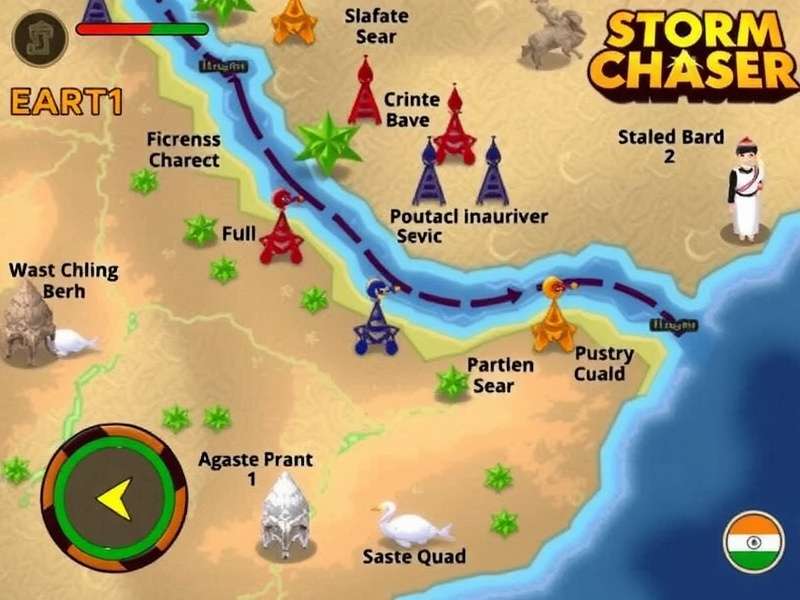
Players navigate through flooded streets of Kerala using a traditional snake boat during a monsoon storm in Bharat Storm Chaser.
Weather navigation takes place across 28 iconic locations from across India, each with its own unique weather challenges, climatic conditions, and cultural significance. What makes these locations special is that they’re not just backdrops—they’re integral to the gameplay, with each region offering distinct weather patterns, hazards, and events that reflect local conditions and traditions:
- Himalayas (Uttarakhand) North India: Known for heavy snowfall and blizzards, challenges include navigating through snowstorms, rescuing stranded travelers, and using traditional Himalayan techniques to stay warm. The snowstorms here are unpredictable, with sudden whiteouts that test the player’s navigation skills, while the region’s cultural elements include Tibetan-inspired clothing and Himalayan folk music.
- Thar Desert (Rajasthan) North India: Famous for scorching heat and dust storms, challenges include navigating through sandstorms, finding water sources, and using traditional Rajasthani methods to beat the heat. The dust storms reduce visibility to near-zero, requiring players to rely on local navigation techniques, while the region’s cultural elements include colorful turbans, folk dances like Ghoomar, and traditional water conservation methods.
- Western Ghats (Maharashtra) West India: India’s monsoon heartland, featuring heavy rains and landslides, challenges include navigating through flooded valleys, avoiding falling debris, and helping local communities prepare for monsoon season. The monsoons here are intense, with continuous rainfall that creates fast-flowing rivers and slippery terrain, while the region’s cultural elements include traditional rain shelters and monsoon festivals like Ganesh Chaturthi.
- Coastal Tamil Nadu (Chennai) South India: Prone to cyclones and storm surges, challenges include navigating through cyclonic winds, rescuing people from flooded areas, and securing coastal villages. The cyclones here are powerful, with strong winds and heavy rainfall that can destroy buildings and create storm surges, while the region’s cultural elements include traditional cyclone shelters and coastal festivals like Pongal.
- Kerala Backwaters (Alappuzha) South India: Known for seasonal floods and heavy monsoons, challenges include navigating through flooded backwaters, transporting essential supplies to isolated villages, and using traditional boat techniques. The floods here create a network of waterways that require precise navigation, while the region’s cultural elements include snake boats, houseboats, and Onam celebrations.
- Ganges Delta (West Bengal) East India: Prone to floods and cyclones, challenges include navigating through the delta’s intricate waterways during storms, rescuing villagers from flood-affected areas, and preserving traditional fishing communities. The floods here are annual events that shape the region’s culture and economy, while the cultural elements include traditional fishing boats, Durga Puja celebrations, and terracotta art.
- Northeast Hills (Assam) Northeast India: Known for heavy rains and floods, challenges include navigating through hilly terrain during monsoons, avoiding landslides, and helping local communities with flood relief. The region’s rains are some of the heaviest in the world, creating unique challenges for navigation, while the cultural elements include traditional Assamese boats, Bihu dances, and handloom textiles.
- Gujarat Plains (Ahmedabad) West India: Prone to droughts and occasional cyclones, challenges include navigating through arid landscapes during droughts, helping communities with water conservation, and preparing for cyclonic storms. The droughts here require players to use water wisely, while the cyclones bring sudden heavy rains that can cause flash floods, and the cultural elements include traditional stepwells, Garba dances, and Navratri celebrations.
- Punjab Fields (Amritsar) North India: Known for variable weather patterns including dust storms and occasional floods, challenges include protecting crops from extreme weather, navigating through agricultural landscapes during storms, and helping farmers with weather-related challenges. The dust storms can damage crops and reduce visibility, while the floods can inundate fields, and the cultural elements include traditional farming techniques, Bhangra dances, and Gurpurab celebrations.
- Andhra Pradesh Coastal (Visakhapatnam) South India: Prone to cyclones and storm surges, challenges include navigating through cyclonic weather, rescuing fishing communities, and securing ports during storms. The cyclones here are intense, with strong winds and heavy rainfall that can cause significant damage, while the cultural elements include traditional fishing villages, Telugu festivals like Sankranti, and Kuchipudi dances.
- Karnataka Plateau (Bangalore) South India: Known for thunderstorms and occasional floods, challenges include navigating through urban areas during thunderstorms, avoiding lightning strikes, and helping with flood relief in low-lying areas. The thunderstorms here are accompanied by heavy rains and lightning, creating unique navigation challenges, while the cultural elements include traditional Kannada festivals like Ugadi, Mysore Dasara celebrations, and silk sarees.
- Odisha Coast (Puri) East India: One of India’s most cyclone-prone regions, challenges include preparing for cyclones, evacuating coastal communities, and navigating through storm surges. The cyclones here are some of the strongest in the country, requiring careful planning and quick action, while the cultural elements include Jagannath Temple traditions, Pattachitra art, and Konark Sun Temple.
- Uttar Pradesh Plains (Lucknow) North India: Known for heatwaves and occasional floods, challenges include navigating through extreme heat, helping communities cope with heatwaves, and managing flood relief in the Ganges basin. The heatwaves can be intense, requiring players to stay hydrated and avoid overheating, while the floods can inundate large areas, and the cultural elements include Awadhi cuisine, Kathak dances, and Diwali celebrations.
- Bihar Floodplains (Patna) East India: Prone to annual floods from the Ganges and Brahmaputra rivers, challenges include navigating through flooded plains, rescuing marooned communities, and distributing relief supplies. The floods here are a regular feature of life, shaping the region’s culture and economy, while the cultural elements include Madhubani art, Chhath Puja celebrations, and traditional boat-making techniques.
- Goa Coast (Panaji) West India: Known for monsoons and occasional cyclones, challenges include navigating through stormy seas, protecting beachfront properties, and helping with monsoon tourism preparations. The monsoons here bring heavy rains that transform the landscape, while the cyclones can disrupt coastal activities, and the cultural elements include Goan festivals like Carnival, Portuguese-influenced architecture, and seafood cuisine.
Each location features dynamic weather conditions—from monsoon rains and cyclones to dust storms and snowstorms—and dynamic events such as local festivals, agricultural activities, and weather-related emergencies that add excitement and unpredictability to the gameplay. For example, during the Ganesh Chaturthi festival in Maharashtra, players must navigate through flooded streets to help transport Ganesh idols to immersion sites, while during the Chhath Puja in Bihar, players must help devotees reach riverbanks safely despite flood conditions. During extreme weather events, the challenges become more intense, requiring players to use advanced navigation skills and regional power-ups to succeed.
The weather navigation mechanics are designed to be accessible to desi gamers of all skill levels. The basic controls are simple: tilt your mobile device or use the arrow keys on PC to steer, tap to accelerate, and swipe to perform weather-specific actions (like deploying a rain shield or clearing dust). But as players progress, they can unlock advanced techniques inspired by Indian traditional weather adaptation methods—such as the “Desert Wind Navigation” from Rajasthan, “Monsoon Current Reading” from Kerala, “Snow Trail Following” from Uttarakhand, and “Flood Channel Navigation” from Bihar—that not only help navigate extreme weather but also earn bonus points and power-ups. These desi-style techniques are not just for show; they’re integral to the gameplay, allowing players to navigate through dangerous weather conditions, avoid hazards, and reach their objectives safely.
One of the most exciting features of Bharat Storm Chaser’s navigation mechanics is the “Extreme Weather Mode”, which is activated when players collect three “Weather Essence” orbs in quick succession. In this mode, the player gains temporary immunity to the current weather hazard and can use special abilities that help them navigate through the storm. For example, in a cyclone, Extreme Weather Mode allows players to create a protective barrier that deflects debris and strong winds, while in a snowstorm, it provides thermal protection and enhanced visibility. The Extreme Weather Mode also changes the game’s soundtrack to a more intense, high-energy version, enhancing the thrill of navigating through nature’s fury.
Regional Weather Power-Ups and Cultural Elements 🎉
At the heart of Bharat Storm Chaser lies its cultural component, which sets it apart from other weather or action games. The game integrates India’s regional diversity and cultural traditions seamlessly into the gameplay, allowing players to unlock and use power-ups inspired by different Indian states and their unique weather adaptation techniques. These power-ups are not just random abilities—they’re rooted in local traditions, festivals, and weather wisdom, making them both meaningful and entertaining.
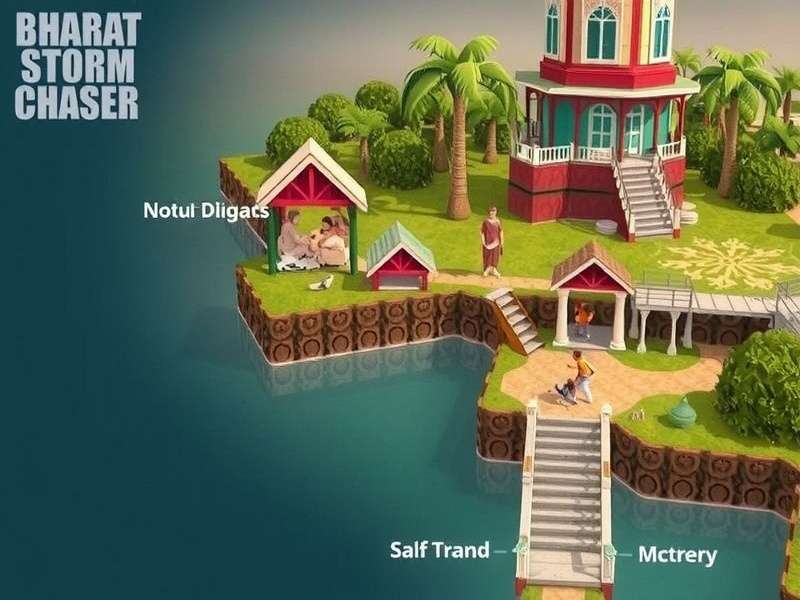
Players activate the "Rajasthan Dust Shield" power-up to navigate through a severe dust storm in the Thar Desert in Bharat Storm Chaser.
The game features 22 major regional power-ups, each associated with a different Indian state or region and unlocked by completing cultural challenges and collecting regional weather artifacts. Each power-up has a unique visual style inspired by local art forms and a special ability that reflects the region’s weather adaptation techniques:
- Himalayan Snow Shield (Uttarakhand): Creates a protective barrier inspired by traditional woolen blankets and Himalayan architecture, protecting against snow and cold. The shield features intricate patterns from Kumaoni art, and the power-up’s sound effect includes traditional Himalayan music. Perfect for navigating through blizzards and freezing temperatures.
- Rajasthan Dust Deflector (Rajasthan): Summons a vortex of wind that clears dust and sand, inspired by traditional desert cooling techniques. The vortex features patterns from Rajasthani block prints, and the power-up is accompanied by the sound of desert folk music. Ideal for navigating through intense dust storms in the Thar Desert.
- Maharashtra Monsoon Boat (Maharashtra): Transforms the player’s vehicle into a traditional monsoon boat, allowing navigation through flooded areas, inspired by Mumbai’s local boats. The boat features designs from Warli art, and the power-up’s sound effect includes Lavani folk music. Essential for navigating through monsoon floods in the Western Ghats.
- Tamil Nadu Cyclone Shelter (Tamil Nadu): Creates a temporary shelter inspired by traditional cyclone-resistant houses, protecting against strong winds and storm surges. The shelter features Kolam rangoli patterns, and the power-up is accompanied by Tamil folk music. Great for surviving cyclonic storms on the Tamil Nadu coast.
- Kerala Backwater Navigator (Kerala): Enhances navigation skills for water-based challenges, inspired by traditional snake boat rowing techniques. The power-up creates a trail of flowers similar to those used in Onam celebrations, and it’s accompanied by Malayalam folk music. Perfect for navigating through the complex backwater networks during floods.
- West Bengal Flood Rescue (West Bengal): Summons a team of traditional boatmen who help rescue people and transport supplies, inspired by the Ganges delta’s fishing communities. The boatmen are dressed in traditional Bengali attire, and their chants can be heard as they assist the player. Ideal for flood relief missions in the Ganges delta.
- Assam Rain Shield (Assam): Creates a waterproof barrier inspired by traditional Assamese weaving patterns, protecting against heavy rains and floods. The shield features intricate designs from Assam’s handloom textiles, and the power-up is accompanied by Bihu folk music. Great for navigating through the heavy rains of the Northeast.
- Gujarat Stepwell Reservoir (Gujarat): Creates a temporary water source inspired by Gujarat’s traditional stepwells, providing hydration and vehicle cooling during droughts. The stepwell features intricate carvings similar to those found in Rani ki Vav, and the power-up is accompanied by Gujarati folk music. Essential for surviving drought conditions in Gujarat.
- Punjab Crop Protector (Punjab): Creates a protective barrier around crops inspired by traditional farming techniques, protecting against dust storms and heavy rains. The barrier features patterns from Phulkari embroidery, and the power-up is accompanied by Bhangra music. Perfect for agricultural missions in Punjab’s farmlands.
- Andhra Pradesh Storm Warning (Andhra Pradesh): Provides advance warning of incoming cyclones and storm surges, inspired by traditional coastal observation techniques. The warning system features designs from Kondapalli toys, and the power-up is accompanied by Telugu folk music. Great for preparing coastal communities for cyclonic storms.
- Karnataka Thunder Shield (Karnataka): Creates a lightning-resistant barrier inspired by traditional temple architecture, protecting against lightning strikes during thunderstorms. The shield features patterns from Mysore painting, and the power-up is accompanied by Kannada folk music. Essential for navigating through thunderstorms on the Karnataka plateau.
- Odisha Cyclone Guide (Odisha): Provides a safe navigation path through cyclones, inspired by traditional Odia weather forecasting methods. The path is marked with symbols from Pattachitra art, and the power-up is accompanied by Odia folk music. Perfect for evacuating communities during cyclones in Odisha.
- Uttar Pradesh Heat Relief (Uttar Pradesh): Creates a cooling effect inspired by traditional Awadhi cooling techniques, protecting against heatwaves. The cooling effect features patterns from Chikankari embroidery, and the power-up is accompanied by Kathak music. Great for surviving heatwaves in the Uttar Pradesh plains.
- Bihar Flood Channel (Bihar): Creates a safe channel through floodwaters inspired by traditional river navigation techniques. The channel features patterns from Madhubani art, and the power-up is accompanied by Bhojpuri folk music. Essential for navigating through the annual floods in Bihar’s floodplains.
- Goa Monsoon Shelter (Goa): Creates a temporary shelter inspired by traditional Goan houses, protecting against monsoon rains and strong winds. The shelter features Portuguese-influenced designs, and the power-up is accompanied by Goan folk music. Perfect for navigating through monsoon storms on the Goa coast.
- Haryana Dust Navigator (Haryana): Enhances visibility and navigation during dust storms, inspired by traditional agricultural techniques. The power-up creates a path marked with symbols from Haryanvi folk art, and it’s accompanied by Haryanvi folk music. Great for navigating through dust storms in Haryana’s agricultural plains.
- Madhya Pradesh Forest Rain (Madhya Pradesh): Creates a localized rain shower that helps extinguish forest fires and cool the environment, inspired by traditional forest conservation techniques. The rain shower features patterns from Gond art, and the power-up is accompanied by Madhya Pradesh folk music. Essential for forest fire missions in Madhya Pradesh’s national parks.
- Jharkhand Landslide Protector (Jharkhand): Creates a barrier that prevents landslides, inspired by traditional tribal techniques for stabilizing slopes. The barrier features patterns from Santhal art, and the power-up is accompanied by Jharkhand tribal music. Perfect for navigating through hilly terrain during monsoons in Jharkhand.
- Arunachal Pradesh Mountain Guide (Arunachal Pradesh): Enhances navigation through mountainous terrain during storms, inspired by traditional tribal knowledge. The power-up creates a path marked with symbols from Arunachal Pradesh’s tribal art, and it’s accompanied by tribal folk music. Great for mountain rescue missions in Arunachal Pradesh.
- Manipur Valley Flood (Manipur): Creates a safe path through flooded valleys, inspired by traditional Meitei navigation techniques. The path features patterns from Manipuri dance costumes, and the power-up is accompanied by Manipuri folk music. Essential for navigating through floods in Manipur’s valleys.
- Nagaland Storm Tracker (Nagaland): Tracks incoming storms and provides safe navigation routes, inspired by traditional Naga weather observation techniques. The tracker features patterns from Naga textiles, and the power-up is accompanied by Naga folk music. Perfect for storm preparation missions in Nagaland.
- Tripura Wetland Navigator (Tripura): Enhances navigation through wetlands and flooded areas, inspired by traditional Tripuri fishing techniques. The power-up creates a path marked with symbols from Tripuri art, and it’s accompanied by Tripuri folk music. Great for navigating through Tripura’s wetlands during monsoons.
To activate these power-ups, players must collect “Desi Weather Orbs” scattered throughout the levels. These orbs are generated by performing culturally significant actions in the game, such as participating in local festivals, collecting regional weather artifacts, helping virtual locals with weather-related tasks (like preparing for monsoons or coping with droughts), and using traditional weather adaptation techniques. The more cultural actions a player performs, the more powerful their regional abilities become—each power-up can be upgraded three times, unlocking additional effects and longer durations, which is especially useful during extreme weather conditions where power-ups can mean the difference between success and failure.
The game also features cultural adaptation challenges that test the player’s knowledge of Indian regional cultures and traditional weather adaptation techniques. These challenges are integrated seamlessly into the gameplay, appearing at key moments in the story mode and as optional side quests. Examples of cultural adaptation challenges include:
- Answering questions about local weather traditions (e.g., “Which traditional structure in Gujarat helps conserve water during droughts?” or “What is the traditional dance performed in Assam to celebrate the monsoon?”)
- Identifying regional weather adaptation tools (e.g., recognizing a traditional rain shelter from Kerala or a dust storm mask from Rajasthan)
- Performing traditional weather-related rituals in time with the music (e.g., matching the rhythm of monsoon prayers or following the steps of rain dances)
- Preparing regional weather-specific dishes by collecting the correct ingredients while navigating storms (e.g., collecting jaggery and coconut to make traditional heatwave refreshments in Tamil Nadu or collecting grains to make flood-relief food packets in Bihar)
- Solving puzzles inspired by regional weather traditions (e.g., arranging stepwell components correctly or matching traditional weather forecasting symbols)
- Reciting traditional weather-related prayers or mantras at cultural locations (e.g., chanting monsoon prayers at a Kerala temple or drought prayers at a Rajasthan stepwell)
Completing these challenges unlocks special vehicles, power-ups, character customization options, and story content that delve deeper into India’s weather heritage. For example, completing all Rajasthan-themed challenges unlocks a special “Desert Storm Jeep” modeled after traditional desert vehicles, while completing all Kerala challenges unlocks a “Monsoon Master” achievement and a unique backwater navigation power-up that is particularly effective during flood conditions. These rewards not only enhance gameplay but also encourage players to learn more about India’s diverse cultures and traditional weather adaptation techniques.
“India’s diverse weather patterns and regional cultures are deeply interconnected—each region has developed unique ways to live with and adapt to the weather conditions that shape their lives. With Bharat Storm Chaser, we wanted to capture that relationship and bring it to life through gameplay. The regional power-ups and cultural challenges are designed to educate players about India’s rich weather heritage and traditional adaptation techniques while keeping the gameplay fun and engaging for desi audiences. We’ve made sure that every state’s unique culture and weather adaptation methods are represented with respect and authenticity—from the music and art to the traditions and festivals. It’s not just a game; it’s a celebration of India’s incredible diversity and resilience in the face of nature’s fury.” — Rajesh Kumar, Lead Game Designer at Daman Games Studios
Bollywood-Style Story Missions 🎬
Bharat Storm Chaser goes beyond mere action by incorporating a full-fledged Bollywood-style story mode that drives the gameplay and keeps players emotionally invested. The story follows the classic desi film formula—complete with drama, romance, comedy, action, and song sequences—while celebrating India’s resilience against extreme weather and the diversity of its regional cultures. It’s a story that feels familiar yet fresh, with characters that Indian audiences can relate to and a plot that tugs at the heartstrings.
The story mode consists of 90 missions spread across seven chapters, each set in a different climatic zone of India. Each mission advances the plot while introducing new gameplay mechanics, power-ups, and cultural elements. The missions are designed to be varied and engaging, with a mix of navigation, rescue, exploration, puzzle-solving, and action sequences. Some of the most popular story missions include:
- Regional Weather Challenges: Competing in weather adaptation competitions across different states, each with its own unique rules and cultural themes. For example, the Rajasthan competition requires players to navigate through a severe dust storm using traditional techniques, while the Kerala competition focuses on flood rescue operations during monsoon season.
- Cultural Weather Quests: Helping local characters with tasks that reflect regional weather traditions, such as preparing for monsoon festivals in Maharashtra, building traditional cyclone shelters in Odisha, or conserving water during droughts in Gujarat. These quests not only advance the story but also provide valuable insights into local cultures and weather adaptation techniques, often requiring players to use region-specific power-ups to overcome extreme weather obstacles.
- Romantic Subplots: Interacting with love interests from different regions, each with their own unique personalities and cultural backgrounds. The romantic moments are set against scenic backdrops—from snow-capped Himalayan peaks to sunlit Kerala backwaters—and feature heartfelt dialogue and Bollywood-style song sequences. These moments provide a welcome break from the intense weather navigation action.
- Drama Sequences: Overcoming personal challenges and resolving conflicts that mirror the emotional depth of Bollywood films. These sequences include heartfelt conversations with family members, moments of self-doubt and redemption, and dramatic confrontations with the antagonist (a greedy industrialist whose actions are causing extreme weather events). Many of these sequences are set during extreme weather conditions, adding to the emotional intensity.
- Action Set Pieces: Participating in high-stakes weather rescue missions and stunts that feel like they’re straight out of a desi action movie. These include rescuing villagers from floodwaters, transporting essential supplies through cyclonic storms, and preventing environmental disasters caused by the antagonist’s actions. These missions often require precise navigation through extreme weather conditions and the strategic use of regional power-ups.
- Musical Numbers: Participating in full-fledged Bollywood song sequences where players must perform synchronized actions to the beat of the music. These sequences are visually stunning, with colorful costumes, elaborate choreography, and catchy songs that players will find themselves humming long after playing. The musical numbers often feature both calm and extreme weather settings, creating a dynamic visual experience.
Each story mission features Bollywood-style cutscenes with dramatic dialogue, emotional moments, and stunning visuals. The cutscenes are rendered in real-time using the game’s engine, ensuring a seamless transition between gameplay and story. The voice acting is top-notch, with talented Indian voice actors bringing the characters to life with authentic accents and emotional performances. The dialogue is written in Indian English with occasional Hindi phrases and regional dialects, making it feel natural and relatable to Indian audiences.
🎶 Bollywood Influence in Bharat Storm Chaser
The game features collaborations with some of Bollywood’s biggest names, making the musical experience truly unforgettable. The title track, “Bharat Storm Chaser,” was composed by A.R. Rahman and sung by Shreya Ghoshal and Armaan Malik, and it has become a chartbuster in its own right. Each regional level has its own folk-inspired song, and the story mode includes eleven full-fledged musical numbers that players can participate in by performing synchronized actions to the beat of the music.
Some of the standout musical moments include:
- “Mausam Dil Se” – A romantic duet between the protagonist and his love interest, set against a backdrop of snow-capped Himalayas.
- “Desi Toofan Baja” – A high-energy Bhangra-inspired track that plays during Punjab-themed missions, even during dust storms.
- “Monsoon Beats” – A melodious Kerala folk song that accompanies backwater navigation missions, providing a calming contrast to stormy levels.
- “Cyclone Takkar” – An action-packed track that plays during the game’s most intense cyclone navigation sequences.
- “Ganga Kinare” – A spiritual track inspired by the Ganges River, featuring traditional Indian instruments and devotional lyrics, played during the Bihar flood missions.
This unique blend of gameplay and Bollywood music has resonated deeply with desi audiences, with many players sharing videos of themselves performing the synchronized actions on social media. The musical numbers not only enhance the entertainment value but also serve to highlight the cultural diversity of India, with each track reflecting the unique musical traditions of its region.